
The Insights · Archived edition

Week of October 5, 2026

The Five Pillars

Published October 5, 2026 Read the current edition →
01

Real Estate Development

Week of October 5, 2026
30%

Basis step-up on Qualified Rural Opportunity Fund investments held five years — triple the 10% standard rate

IRS Notice 2026-40, June 2026
30% Rural QOF step-up Five-year hold
10% Standard QOF step-up Five-year hold
Industrial $32.5B +27% YoY Office $18.5B −9% YoY
US investment volume by sector, Q2 2026. Drawn from the figures cited on this card (MSCI Real Capital Analytics).

US Policy

  • IRS Notice 2026-40 (June 18, 2026) set transitional Opportunity Zone rules under the 2025 OBBBA. New OZ 2.0 designations take effect January 1, 2027.
  • Treasury and the IRS proposed REG-116506-25 on September 10, 2026, requiring annual QOF information returns and investor statements. Penalties reach $500 per day for late or incomplete Form 8996 filings.
  • The comment period closes October 16, 2026. A telephonic hearing is set for November 5, 2026.

Global Signal

  • US industrial investment reached $32.5B in Q2 2026, up 27% year-over-year — the quarter's strongest sector (MSCI Real Capital Analytics).
  • Office fell to $18.5B in Q2 2026, down 9% year-over-year, with CBD office down 17% and suburban down 5% (MSCI Real Capital Analytics).
  • JLL reported office activity up 61% year-over-year in Q1 2026 — a separate provider and quarter, not the same series.

What It Means

The rural fund class carries three times the standard step-up. The January 1, 2027 designation date sets a defined planning window for asset owners and foreign developers. Reporting obligations tighten in the same period. Office has given back its Q1 advance while industrial leads on volume.

Sources: Internal Revenue Service — Notice 2026-40 (June 18, 2026) and proposed regulations REG-116506-25 (September 10, 2026); MSCI Real Capital Analytics — Q2 2026 US Capital Trends (via Colliers, July 30, 2026).

02

Logistics

Week of October 5, 2026
2.9M TEU

Port of Los Angeles volume, June–August 2026 — the busiest three-month stretch in port history

Port of Los Angeles, September 2026
12.7M TEU H1 2026 actual +1.1% YoY
12.27M TEU H1 2026 projection −2% YoY (Feb 2026)
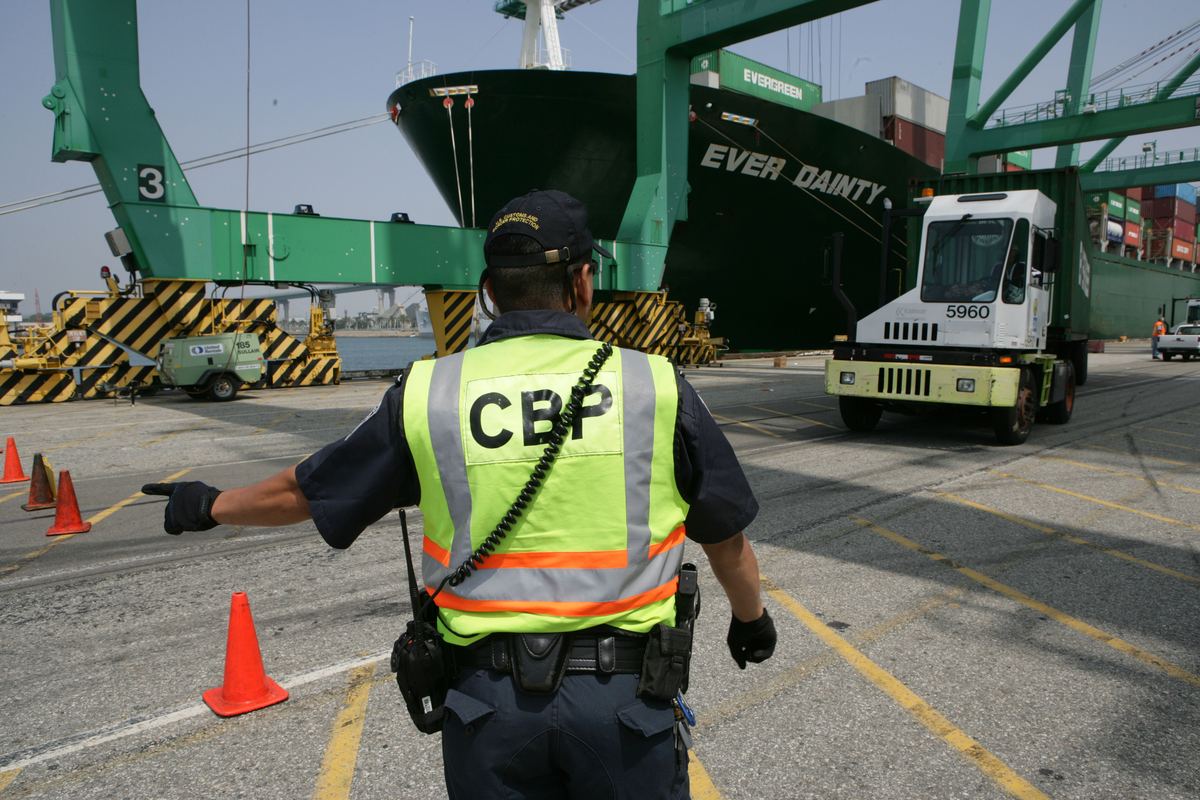
A U.S. Customs and Border Protection officer directs a truck carrying a seaport container toward an inspection area at the Port of Los Angeles.
Container inspection at the Port of Los Angeles, Evergreen Terminal. Photograph: James Tourtellotte, U.S. Customs and Border Protection — public domain.

US Policy

  • Tariff timing continues to set import flows. NRF's Global Port Tracker put full-year 2026 US import volume at 25.5M TEU, up 0.1% over 2025.
  • First-half 2026 came in at 12.7M TEU, up 1.1% year-over-year — above the 12.27M TEU and −2% that NRF projected in February 2026.

Global Signal

  • The Port of Los Angeles handled 955,907 TEU in August 2026, within 0.26% of August 2025. Loaded imports were 500,302 TEU; loaded exports fell 9%.
  • Year-to-date through August: just over 7M TEU, up 1.5% year-over-year and 5% above the port's five-year pace.
  • NRF forecasts October at 2.13M TEU, up 2.7%, then November at 2.03M TEU, up 0.3%.

What It Means

The projected first-half decline did not occur. Volume held and then set a record summer. Foreign operators building US distribution should not assume West Coast slack when planning capacity. Peak arrived in May at 2.24M TEU — earlier than historical pattern — so timing, not volume, is the variable to manage.

Sources: Port of Los Angeles — "Port of Los Angeles Posts Best Three-Month Cargo Stretch in Port History" (September 9, 2026); National Retail Federation / Hackett Associates — Global Port Tracker (August 7, 2026).

03

Food & Beverage

Week of October 5, 2026
$1.2B

Weekly US farm-goods purchases China must make through December 31, 2026 to meet its 2026 commitment

Dan Basse, AgResource, via Agri-Pulse, September 2026
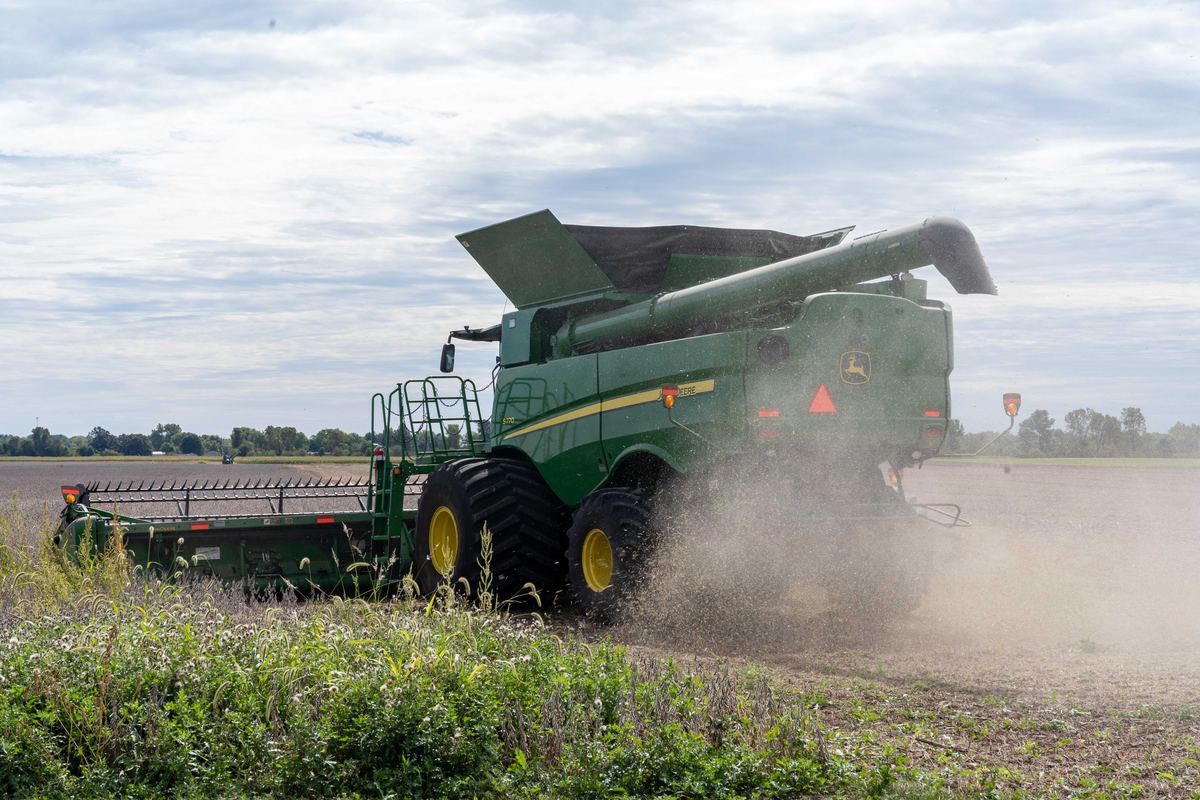
A combine harvester cutting a soybean field in Brownsburg, Indiana.
Soybean harvest, Brownsburg, Indiana. Whole soybeans are excluded from the tariff-relief lists described above. Photograph: U.S. Department of Agriculture — public domain.

US Policy

  • The White House released "30-for-30" product lists on September 27, 2026, covering roughly $30B of goods on each side for tariff relief — 1,619 US product lines and 77 Chinese lines.
  • China's list covers beef, pork, poultry, dairy, corn, wheat, sorghum, vegetable oils and meals. Whole soybeans are excluded and remain subject to a 10% Chinese retaliatory duty.
  • No effective dates or new duty rates have been announced. The trade truce runs through January 10, 2027 (Reuters).

Global Signal

  • Of the $17B annual commitment — prorated near $14B for 2026 — China has spent $3.5B–$4B, leaving roughly $10B before December 31 (AgResource).
  • About 10M metric tons of the 25M-ton annual soybean pledge remain unpurchased.

What It Means

June's commitment now carries a measurable pace requirement. For food operators sourcing US product, the relief lists open specific categories — meat, dairy, grains, oils — while whole soybeans stay outside the mechanism. Duty rates and effective dates remain undefined, so landed cost cannot yet be modeled.

Sources: Agri-Pulse — "China must spend $1.2B a week to meet US ag pledges, Basse says" (September 24, 2026) and "White House releases '30-for-30' China framework to reduce tariffs" (September 28, 2026); Reuters — "China, US agree to tariff cuts on $60 billion of goods" (September 28, 2026).

04

Education

Week of October 5, 2026
$3.4B

Projected US economic loss from fewer international students, Fall 2026

NAFSA / JB International, August 2026
Fall 2026 vs Fall 2025 −9.5% 111,000 fewer students $3.4B projected economic loss ~40,000 fewer US jobs
Projected Fall 2026 international enrollment against Fall 2025. Drawn from the figures cited on this card (NAFSA / JB International).

US Policy

  • DHS published its final rule ending Duration of Status on July 17, 2026. It took effect September 15, 2026 (Federal Register, Doc. 2026-14439).
  • F students are admitted for the I-20 program length, capped at four years, plus 30 days to arrive and 30 days to depart. English language training is capped at 24 months.
  • Extensions require an updated Form I-20 plus a Form I-539 filing, fees, and biometrics. Students admitted before September 15, 2026 may remain to their I-20 program end date.

Global Signal

  • NAFSA and JB International project 111,000 fewer international students in Fall 2026 — a 9.5% decline from Fall 2025 — and nearly 40,000 fewer US jobs.
  • Graduate enrollment is the primary driver of the projected loss, concentrated at institutions with the largest international populations.

What It Means

June's proposed rule is now in force. Open-ended status is gone. Multi-year programs carry an extension filing that did not exist before September 15. For education operators and asset owners, the 9.5% projection is the planning baseline for the 2026–27 year.

Sources: Federal Register — "Establishing a Fixed Time Period of Admission and an Extension of Stay Procedure" (July 17, 2026, Doc. 2026-14439); DHS Study in the States — Final Rule Quick Facts; NAFSA / JB International — "Fall 2026 International Student Enrollment Outlook & Economic Impact" (August 11, 2026).

05

AI, Robotics & Energy

Week of October 5, 2026
$120B

Korean investment committed to finance eight large nuclear reactors on US federal sites — six AP1000 and two APR1400

US–Korea framework agreement, via Brookfield Asset Management, September 30, 2026
$120B US–Korea framework Eight reactors · Sept 2026
$17.5B DOE conditional loans Ten reactors · June 2026
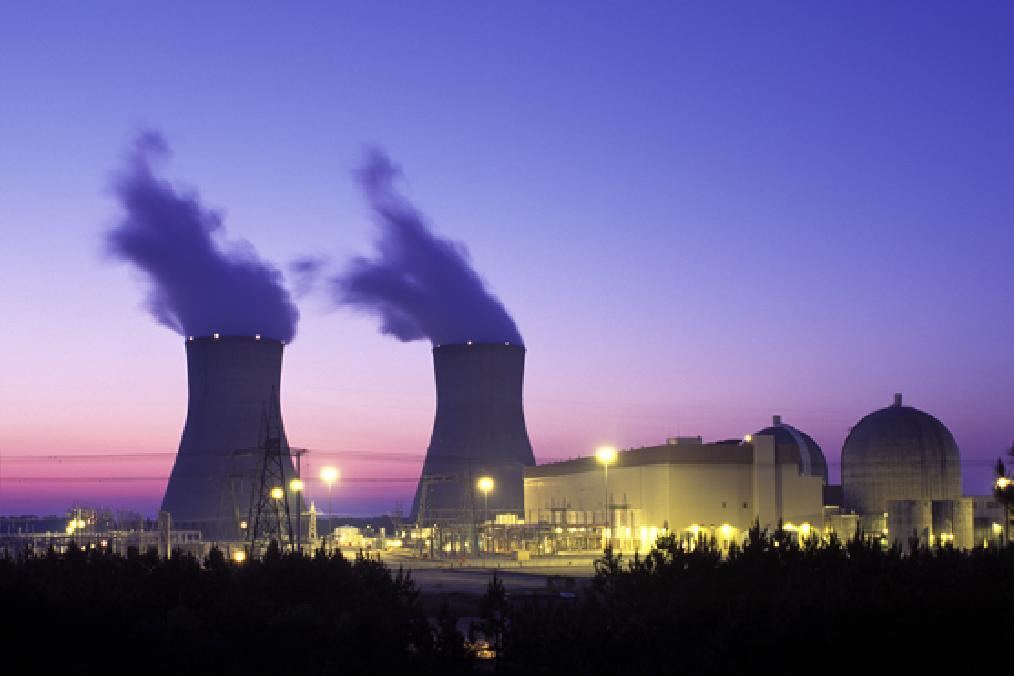
Aerial view of the Alvin W. Vogtle Electric Generating Plant in Georgia, showing its reactor containment buildings and cooling towers.
Alvin W. Vogtle Electric Generating Plant, Georgia — the US site already operating Westinghouse AP1000 reactors of the type in the framework. Photograph: U.S. Nuclear Regulatory Commission — public domain.

US Policy

  • The Department of Energy committed up to $17.5B on June 23, 2026, through its Office of Energy Dominance Financing, to accelerate deployment of 10 new reactors by financing long-lead components before construction begins.
  • The program supports up to five projects, each with two Westinghouse AP1000 reactors at a single site. DOE said the approach could move deployment ahead by as much as three years if projects meet required conditions.
  • DOE selected the INL-led Prometheus project for $60M over three years — the largest of 278 Genesis Mission awards — to apply AI to reactor design, licensing, manufacturing, construction, and operation.

Global Signal

  • The US–Korea strategic framework of September 30, 2026 commits up to $120B of Korean investment for eight reactors on federal sites designated by the US Government.
  • The framework is nonbinding and sits separately from DOE's June 2026 financing. It follows an October 2025 Commerce–Westinghouse partnership covering at least $80B of reactors on federal sites.
  • Federal siting is positioned to support the power and compute buildout required by growing US electricity demand, including from AI data centers.

What It Means

Federal policy now links new generation capacity directly to AI and compute demand. The Korea framework places Korean capital and companies inside the US reactor buildout on federal sites. For Asian operators in energy equipment, components, and AI infrastructure, the entry point is set by long-lead procurement and federal siting, not open-market timing. The framework is nonbinding, so the schedule to watch is the DOE financing and the Prometheus licensing work, not the headline number.

Sources: Brookfield Asset Management — "U.S. – Korea Framework Advances Deployment of Westinghouse Nuclear Technology in the United States" (GlobeNewswire, September 30, 2026); U.S. Department of Energy, Office of Energy Dominance Financing — $17.5B conditional loan commitment for 10 AP1000 reactors (announced June 23, 2026); Idaho National Laboratory — Prometheus, Genesis Mission Phase II award ($60M over three years); American Nuclear Society — "Nuclear is prominent in Genesis Mission projects" (July 23, 2026).

Tell us what's challenging. We will tell you how we would move.

Every inquiry receives a response within 48 hours.

Talk to Us →